Aisin AWF21
Fitted to early automatic Evoques before the nine-speed arrived. Diagnostic areas can include valve-body wear, solenoid control, delayed engagement, harsh shifts and internal clutch wear.
SPEAK TO A TECHNICIAN NOW 01922 666 376 8am - 5.30pm Mon-Fri
Specialist diagnosis, repair and reconditioning for Range Rover Evoque automatic gearboxes, including the early Aisin six-speed, the widely used ZF 9HP48 nine-speed and the later dedicated eight-speed hybrid automatic used on P300e applications.
If your Evoque is jerking, hesitating, refusing gears, displaying a gearbox fault, shuddering on acceleration or delaying before Drive or Reverse engages, identifying the exact transmission and fault comes before replacing parts.
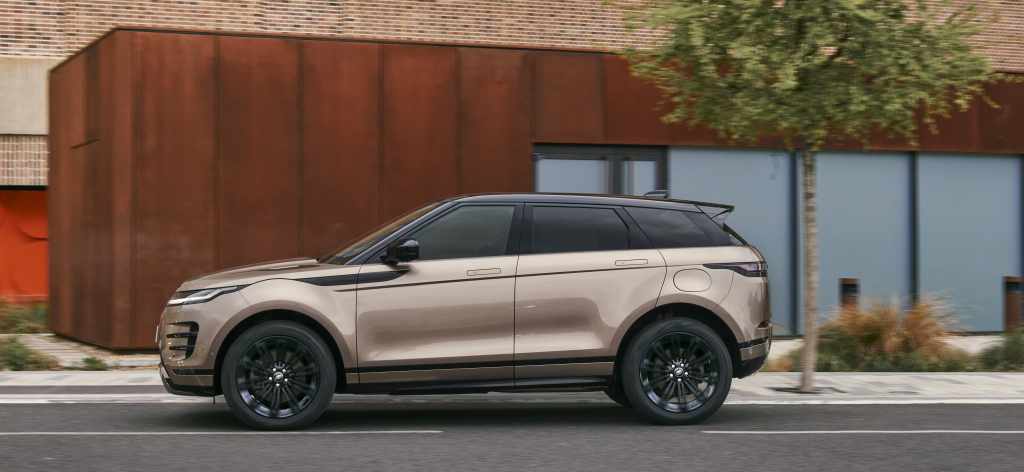
The Evoque has changed transmission architecture several times. Early first-generation automatics used a six-speed Aisin unit, 2014-on cars moved to ZF's transverse nine-speed 9HP, while the P300e plug-in hybrid introduced a dedicated eight-speed automatic.
| Range Rover Evoque generation / type | Typical UK engines / versions | Automatic gearbox | What owners often search for |
|---|---|---|---|
| First-generation L538, 2011–2013 Pure, Prestige, Dynamic |
2.2 TD4 / SD4 diesel and 2.0 Si4 petrol depending on market | Aisin AWF21 six-speed automatic on early automatic variants | Evoque 6-speed gearbox fault, AWF21 harsh shift, Evoque delayed Drive |
| L538, 2014–2018 Facelift and later first-generation models |
2.0 petrol and diesel / Ingenium-era variants | ZF 9HP48 nine-speed automatic | Evoque 9-speed gearbox problems, 9HP48 fault, Evoque gearbox warning |
| Second-generation L551, 2019–present Petrol and diesel MHEV |
2.0 Ingenium petrol and diesel | ZF nine-speed automatic on four-cylinder AWD applications | Evoque 9HP gearbox fault, harsh low-speed shift, transmission limp mode |
| Evoque P300e / plug-in hybrid | 1.5 three-cylinder petrol + rear electric drive | Dedicated eight-speed automatic integrated into the hybrid powertrain | Evoque P300e gearbox fault, hybrid transmission warning, P300e not selecting gear |
Fitted to early automatic Evoques before the nine-speed arrived. Diagnostic areas can include valve-body wear, solenoid control, delayed engagement, harsh shifts and internal clutch wear.
Introduced for the 2014 Evoque. It uses nine ratios in a compact transverse design and can develop pressure, software/adaptation, valve-body, dog-clutch and internal transmission faults.
The P300e uses a dedicated eight-speed automatic designed to work with the three-cylinder engine and electric rear axle. Hybrid transmission diagnosis should be treated separately from a conventional 9HP Evoque.
The same Evoque symptom can have several causes. On the 9HP in particular, software/adaptation, oil level, hydraulic pressure, valve-body control and internal mechanical faults can overlap, so the diagnosis should be evidence-led.
A thump, hesitation or abrupt change at low speed can involve adaptation, hydraulic control, valve-body operation or internal clutch engagement.
A pause after selecting D or R may point towards pressure build-up, valve-body control, fluid level, seals or internal clutch application.
A gearbox fault message or restricted gear operation should be scanned with Land Rover-compatible diagnostics before the vehicle is driven further.
Shudder under light acceleration can be transmission-related, but driveline, PTU, propshaft and wheel/tyre faults can create a similar sensation.
Engine revs rising without matching acceleration can indicate clutch application or hydraulic pressure problems and should be investigated quickly.
The 9HP uses a complex internal gearset and dog clutches. A refusal to select certain ratios or repeated emergency mode requires code-led diagnosis.
Range Rover Evoque automatic gearbox diagnostics and repair across the Midlands.
Customers often describe an Evoque gearbox problem by the way it feels rather than by a technical code. Those descriptions are useful diagnostic clues.
| What you notice | How drivers describe it | Possible areas to investigate |
|---|---|---|
| Bang or thump into Drive | “It pauses and then goes into gear with a jolt.” | Hydraulic pressure, valve body, adaptation, clutch application or mounts |
| Jerky changes at low speed | “It cannot decide which gear it wants around town.” | 9HP adaptation, software, valve-body control or internal clutch/dog-clutch operation |
| Whining noise | “The whine changes with road speed or gear.” | Fluid level/condition, bearings, pump or final-drive components |
| Shudder under acceleration | “It feels like a vibration through the floor.” | Transmission clutch/pressure control, PTU, propshaft, driveshaft or wheel/tyre issue |
| RPM flare | “The revs rise before the gear catches.” | Clutch application, hydraulic pressure loss, solenoid/valve-body fault or internal wear |
| Stuck in a gear / limp mode | “The gearbox fault came up and it stopped changing normally.” | TCM fault, hydraulic control, internal diagnostic fault or protection mode |
Jaguar Land Rover has published technical guidance for some 2014–2015 Evoques with the ZF 9HP48 covering internal transmission DTCs P07D4-07, P2704-07 and P07E7-07. Other standard transmission codes may also appear depending on the fault and model year.
| Fault code | What it broadly relates to | What may need checking |
|---|---|---|
| P07D4-07 | 9HP internal transmission diagnostic fault documented by JLR | Transmission serial number, oil level/leaks, TCM software and internal transmission condition |
| P2704-07 | Transmission friction element apply-time / internal diagnostic fault documented by JLR | Serial-number applicability, fluid level, leaks, software and internal clutch operation |
| P07E7-07 | 9HP internal transmission diagnostic fault documented by JLR | Oil level, leak points, software level and internal transmission diagnosis |
| P0700 | Transmission control system has requested a warning / MIL | Read the TCM for the underlying transmission-specific DTCs |
| P0730 | Incorrect gear ratio | Commanded versus actual ratio, clutch application, pressure control and internal wear |
| P0741 | Torque-converter clutch performance / stuck off on applicable conventional automatics | Converter lock-up operation, valve body, pressure control and transmission condition |
A code does not automatically identify the part to replace. JLR's 9HP guidance specifically requires serial-number, oil-level/leak and software checks on affected vehicles before moving to internal repair.
There is no single Evoque gearbox-repair price because an early Aisin valve-body fault, a ZF 9HP internal failure and a P300e hybrid transmission problem are very different jobs. The ranges below are broad specialist guides only.
| Range Rover Evoque gearbox work | Typical guide range | What can change the price? |
|---|---|---|
| Diagnostic scan, road test and initial assessment | From £30 | Depth of testing and whether further pressure/live-data checks are needed |
| Valve-body / solenoid related repair | Approx. £700 - £1,500 | Transmission type, solenoids, hydraulic wear and coding/adaptation requirements |
| Early Aisin six-speed repair / reconditioning | Approx. £2k - £4k+ | Internal wear, valve body, clutches and hard-part damage |
| ZF 9HP48 full repair / reconditioning | Approx. £2k - £4.5k+ | Internal damage, clutch/dog-clutch components, valve body and labour |
| P300e hybrid transmission repair | Diagnosis required | Hybrid system interaction, exact transmission fault and component required |
We establish whether the Evoque has the early Aisin six-speed, a ZF 9HP application or the dedicated P300e hybrid transmission.
Land Rover-compatible diagnostic equipment is used to read TCM fault codes, live data and relevant adaptation values.
Fluid level/leaks, adaptation behaviour, pressure control, valve-body operation and relevant AWD components are checked against the symptom.
We recommend the repair indicated by the diagnosis and confirm the price before work begins.
Tell us the year, engine, whether it is P300e if relevant, and exactly how the Evoque behaves. We can identify the likely transmission and advise on the next diagnostic step.
Service4Service Midlands provides Range Rover Evoque automatic gearbox diagnosis and repair for drivers across Birmingham, Coventry, Wolverhampton, Walsall, Solihull, Leicester, Derby, Nottingham, Stoke-on-Trent, Northampton and surrounding East and West Midlands areas.
Whether your Evoque is hesitating in Birmingham, displaying a gearbox fault in Coventry, shuddering in Wolverhampton or refusing Drive near Leicester, the aim is the same: identify the exact gearbox and diagnose before replacing parts.
Looking for broader Land Rover and Range Rover transmission information? Visit our Land Rover gearbox repair page.
Jerking can be caused by adaptation/software, hydraulic pressure, valve-body control or internal clutch operation. On ZF 9HP cars the symptom should be assessed together with fault codes and transmission adaptations.
Early L538 automatics used an Aisin six-speed. From the 2014 model year the Evoque adopted the ZF nine-speed automatic, while the later P300e plug-in hybrid uses a dedicated eight-speed automatic. VIN/build data is the safest identification method.
Common complaints include harsh or delayed shifts, refusal of certain gears, gearbox warning messages, pressure-related faults and internal transmission DTCs. JLR has published guidance for P07D4-07, P2704-07 and P07E7-07 on some early 9HP48 Evoques.
A targeted valve-body or solenoid repair may remain below the cost of a full rebuild, while a significant 9HP internal repair can move into the low thousands. Diagnosis is needed before a fixed price can be given.
If it is losing drive, slipping badly, banging into gear, overheating or entering limp mode, continued driving can cause additional damage. Recovery is preferable where the vehicle cannot be driven safely.
Yes. PTU, propshaft, rear-drive and mounting faults can cause vibration, clunks or resistance that feel transmission-related, so diagnosis should consider the complete driveline.
Aisin six-speed, ZF 9HP48 or P300e hybrid transmission — start with the exact vehicle, fault code and symptom, then repair what is actually wrong.